


In 2023, I published a book on how to become who you want to become. As Carl Jung puts it, The privilege of a lifetime is to become who you truly are. This is also what today’s essay is about—if this post speaks to you, I recommend reading The Pluri Society (800+ copies sold):
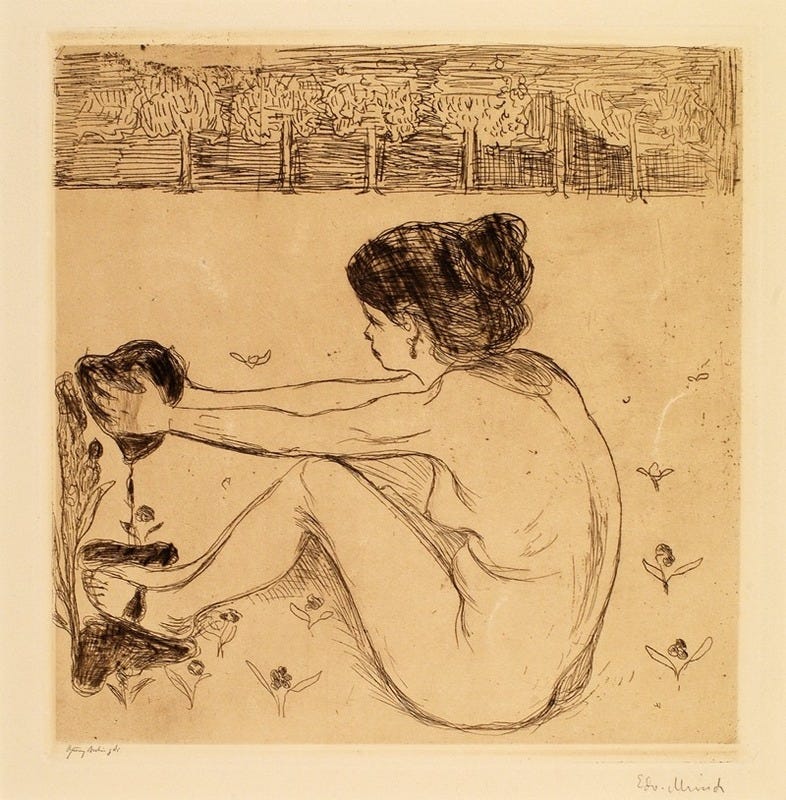
In seventh grade, my science teacher had a great poster on the wall that read Watch your thoughts, they become your words; watch your words, they become your actions; watch your actions, they become your habits; watch your habits, they become your character; watch your character, it becomes your destiny.
A decade later, out of curiosity, I walked into an Alcoholics Anonymous meeting that was happening across the street from my house, where I first heard of the motto: Your best thinking got you here. If our thoughts steer our destiny, why is there still so much suffering among people who know better?
The tension between these two sayings is the most important question you can ask about what it means to become someone better: the first puts you in the driver’s seat; the second suggests the car has been going somewhere you didn’t choose. The Nietzschean wrinkle in the promise of agency is that you are as responsible for your own destruction as you are for your glimmering success, so, what happens when we come to the end of ourselves? If thinking is the epicenter of our lives, why can’t we simply think ourselves out of addictions, pits of depression, or panic attacks? Why do people leave their families? Why can’t we shed our worries? Why do people commit suicide?
Why does education not reduce sadness? Why does memorizing the teachings of prophets not make a person feel comforted in times of crisis or closer to God at all? Addictions are called addictions precisely because they make you feel like you no longer have agency. Your best thinking got you here means: the tool you’re trying to use to escape your disease—your conscious, watchful, rational mind—has been running the whole time, and it hasn’t changed anything.

The “watch your thoughts” motto is useful, but it puts on a pair of Cartesian glasses that are hard to take off. I think therefore I am quickly becomes I am my mind. And from there, most people adopt the assumption that human beings are thinking animals.
But behavioral finance, advertising, and every romance movie ever made clearly show the opposite. We panic, we lust, we fear, we envy. We are largely irrational creatures whose behaviors stray wildly from our theorems, our equations, our stated values, our best intentions. So the paradigm shifts: maybe we are feeling things that think.
But clearly, living by the whims of passion doesn’t get us far without discipline, budgeting, and principles. So, we teeter-totter between thinking and feeling, balancing how to satisfy both the Cartesian and the Romantic—because both are real, yet neither get to the core of our nature.
The center of the human being is the heart. Humans are not thinking things that feel, nor are we emotional things that reason. You are what you love—what you practice, what you pay the most attention to, what you worship, what you desire. Before you are a thinker and a feeler, you are, first and foremost, a LOVER.
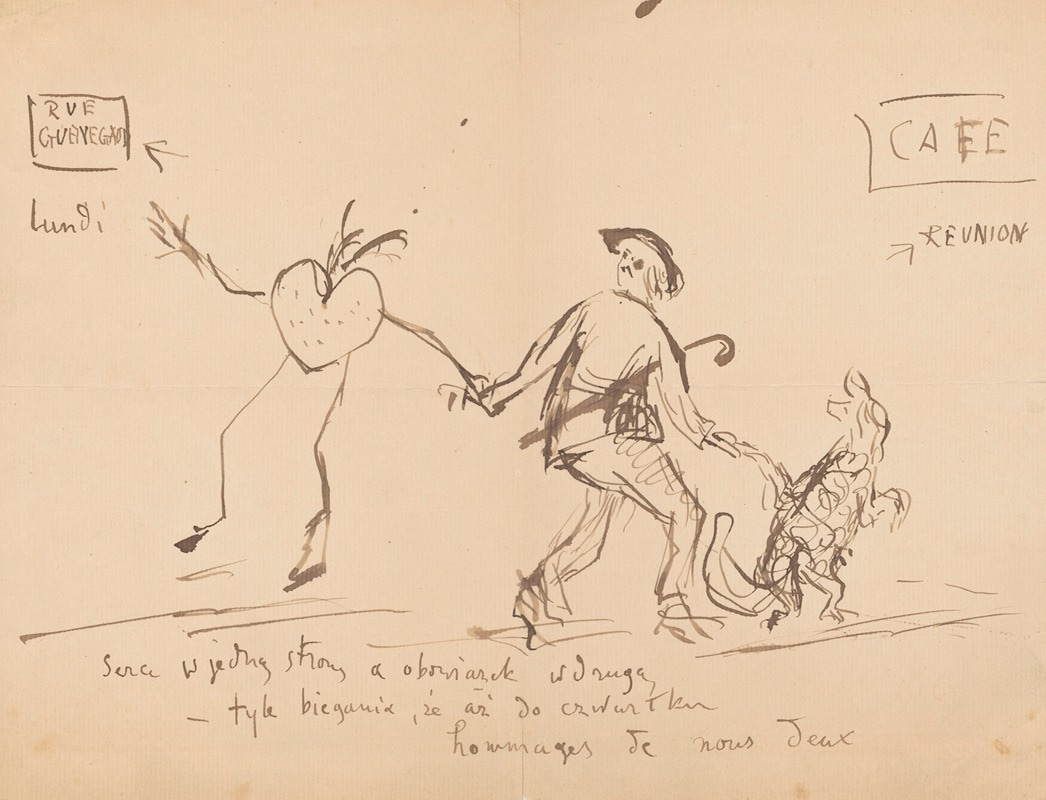
Our culture has warped the word “heart” to mean sentimentalism or something sappy and emotional, but it’s not what the Greeks meant by kardia. The heart, in its original and serious sense, is the fulcrum of your most fundamental longings: it’s a visceral orientation to the world. The center of gravity in the human being is love, and we fall towards what we desire.
We all seem to know that the heart means something deeper than mere belief, that it points at conscience, morality, and things that matter. It’s what we mean when we deliver bad news “with a heavy heart.” It’s what Lady Macbeth’s doctor means when he says that “the heart is sorely charged” and that “more needs she the divine than the physician”—only absolution can reach what medicine can’t, because guilt and truth are matters of the heart, not the intellectual head or the emotional gut. So,
What are we made for?
We are made for wanting. A person is an appetite.
When we stop wanting, we are diseased (literally, dis-eased, not at ease). We know this physically: when we have the flu we don’t feel like eating, and we know we’re recovering when our appetite returns. The same is true at every other level. It’s what Ezekiel meant by, “I will remove from you your heart of stone and give you a heart of flesh.” A hardened heart is not just stubbornness, it’s spiritual sickness. Think of how a healthy person has a robust metabolism, a strong digestion, a high libido, and a high cell turnover rate. Healthy means physically active, happy, and flexible. Healthy means being antifragile—Nassim Taleb’s concept that something is good not just because it’s resilient but because it recovers quickly and improves from disorder. To be alive—on all levels and in all things—means to be capable of change. To be made of flesh instead of stone is to live, to hunger, to transform, and all desire is a desire for being.
We are existential sharks: never static, always oriented toward something, always moving. This is what philosophy means by telos: there is a longing deeper than knowing or believing, a desire that defines you because it points you toward where you are going. It’s our mission, our direction of growth. We are human becomings as much as we are human beings.
You can’t not love. The question is never whether you will orient yourself toward something ultimate, but what that something will be. And since our hearts are made to find their end in what makes us most fully alive, we inevitably get stuck in anxiety and restlessness when we aim at substitutes, when we apply ourselves to anything less than what we actually love. It’s why loving the right things feel like falling upward.
Winnie the Pooh once said, “Sometimes the smallest things take up the most room in your heart,” which is similar to King Solomon’s, “Above all else, guard your heart, for everything you do flows from it”: both get at the same point, which is, what you let occupy you becomes your future. It determines the direction of your days, the person you are growing into. Change doesn’t begin in your thinking, but in the orientation of your loving.
Love is the condition for knowledge. I used to think that I must know in order to love—that I must learn about something before I can love it, that I must understand someone before I can make up my mind about how I feel about them—but, truth is, it’s the opposite: I love in order to know. When you’re heart is postured at the Right Thing, more of that thing is revealed to you.
Ultimately, what I’m trying to say is,
You cannot think yourself into a new person
When we want to change, the metamorphosis we look for is not intellectual (you can’t just “know” what’s good for you and suddenly get better). The addict doesn’t need more information about why their habit is destroying them. What they need is a different want, by practice and intention—by submitting to different desires. You don’t recover from an addiction when you’re deprived of that thing, you recover when you don’t want it anymore, even when it’s placed right in front of you. A true change in being is a change in appetite. True conversion is a change in heart.
When people think of religion, they typically think of rules and punishment without getting to the core of why these structures exist in our creaturehood—anthropologically and psychologically, collectively and individually, mythologically and pragmatically. All religions are more alike than they are different in the sense that they all have to do with surrendering the self to the Other, submitting one’s heart to a greater Love and letting all other desires pale in comparison. The very word Islam means submission; Buddhist vissagga is about letting go of worldly concerns; it’s what Judeo-Christianity means by loving God with all your heart and placing no other gods above it.
Living a heart-led life is saying, how you do one thing is how you do everything. The path upward is not more consciousness or more rigorous self-monitoring, but the embodied work of reordering your loves: finding something worth loving completely, and letting that love do what only love can: shape you, from the inside out, into someone new.
~

Others in this mini series:


"We are human becomings as much as we are human beings." YES.
such a powerful explanation and reason to choose to love yourself. love yourself, accept yourself, know and become yourself.