


I ask this one thing: let me go mad in my own way.
— Electra, play by Seneca
Every great writer, in my imagination, begins as an amateur tyrant: it starts with a mustard seed of belief that the best version of the world is made in one’s own image, that with enough amphetaminergic will, a real change can happen in society—civilization, at large—according to one’s own visions. Alas, the world tilts on the axis of its most opinionated, most articulate thinkers.
Sooner than later, the amateur tyrant loosens their grip on world domination when they realize that all philosophy is, at once, a confession of one’s true colors: the Stoic is by disposition a neurotic; the ascetic is naturally a sensualist. If the roots of a tree truly go as far down as its branches reach the sky, then it takes a great survivor to become a great specialist. 久病成医, “a long illness makes one a good doctor”.
I imagine every great writer eventually develops a taste for masochism. Writing is a way of indulging in self-discovery, sometimes dressed up as character building, but at bottom it’s always self-exposure, which, too often, comes with a side of shame.

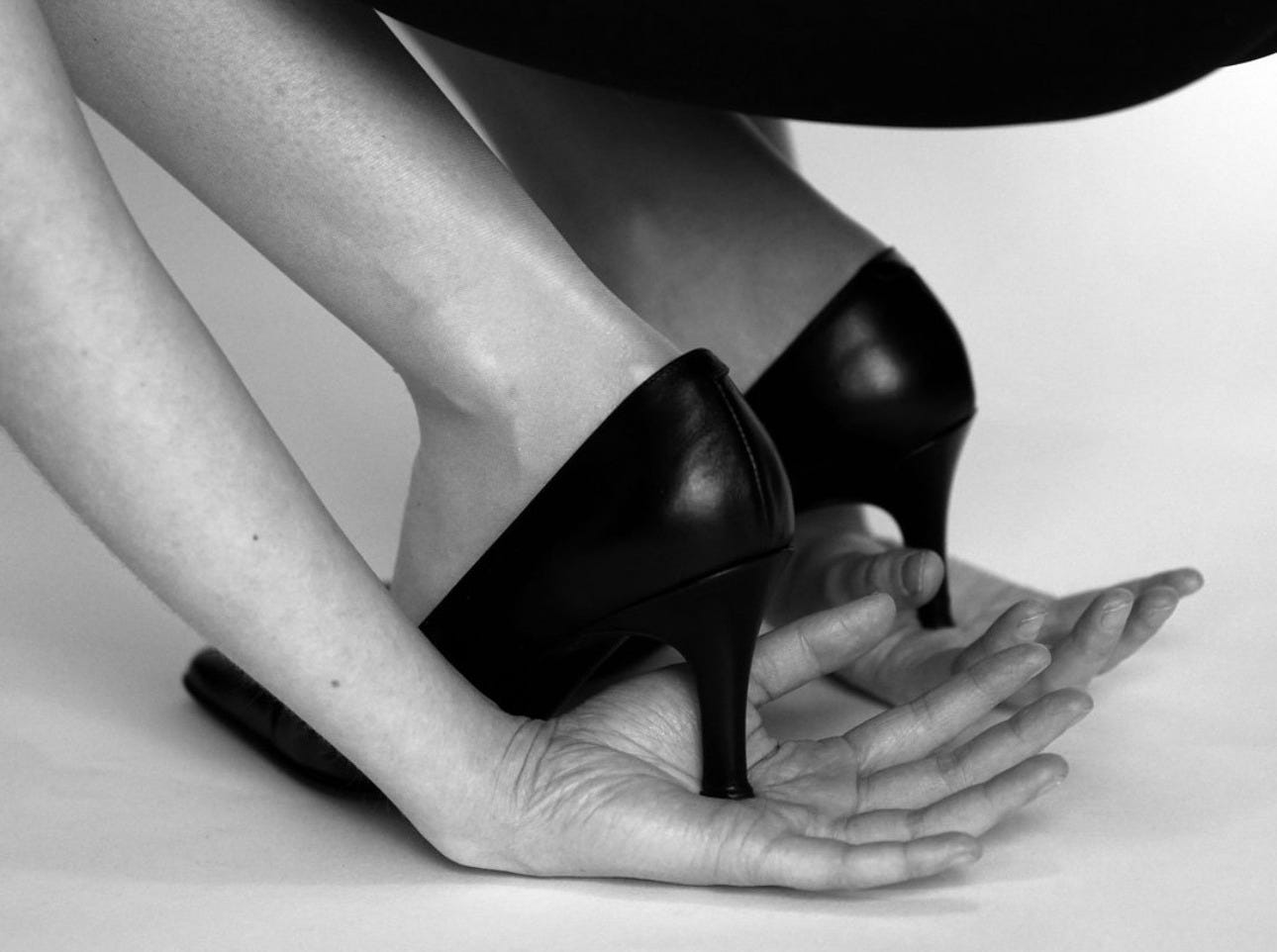
“Humiliation” comes from the Latin, humus, meaning earth. This is also the root word for “humility” and “human”, which means that Being has to do with lowering oneself. If the joy of submission can be found in humility (i.e., religion), it can also be found it humiliation, albeit perverse. Humiliation happens when hubris (false pride) is exposed as weakness or stupidity, and being overpowered can either be perceived as being graced or degraded—you can be Paul or you can be Icarus. And so, I think masochism can piously and wholeheartedly expresses “you are dust, and to dust you shall return” as much as worship can be BDSM-shaped (eg. self-flogging, prostration pilgrimage, etc.).

In a 2016 study of 14 BDSM practitioners, researchers found that submission was associated with transient hypofrontality, an altered state of consciousness that feels like temporarily reduced executive functioning. Submissive participants also scored an average of 4.54 out of 5 for loss of self-consciousness on a flow questionnaire. Research, religion, poetry, and pornography all conclude that the pleasure of submission lies in the relief of escaping oneself and giving oneself to another, letting another take control.
Four centuries earlier, St. Teresa of Ávila described the joy of this kind of surrendering. She spoke of her mystical ecstasies—prayers as orgasms—as a great freedom and happiness that comes from relinquishing control. It’s not uncommon for mystics and saints to talk like lovers when speaking of God because the relationship a pious heart has with a perfect Creator is deeply based on submission, on being a good bride. (Translations of “submission” gets complicated in the New Testament, but you get my point).
Humus, soil, is the dark organic material produced by the decomposition of life—rot is essential to fertility, like how every rebirth you look for is in a death you find yourself avoiding. So, humiliation is somewhat vital: any endeavour that’s going to make you feel more alive is going to soil your soul.