


Eleven more hours until tomorrow. Two more days until the end of January. Three more months until I get married. I like countdowns because they give me a sense of time being linear: things do end, and that something else will follow it.
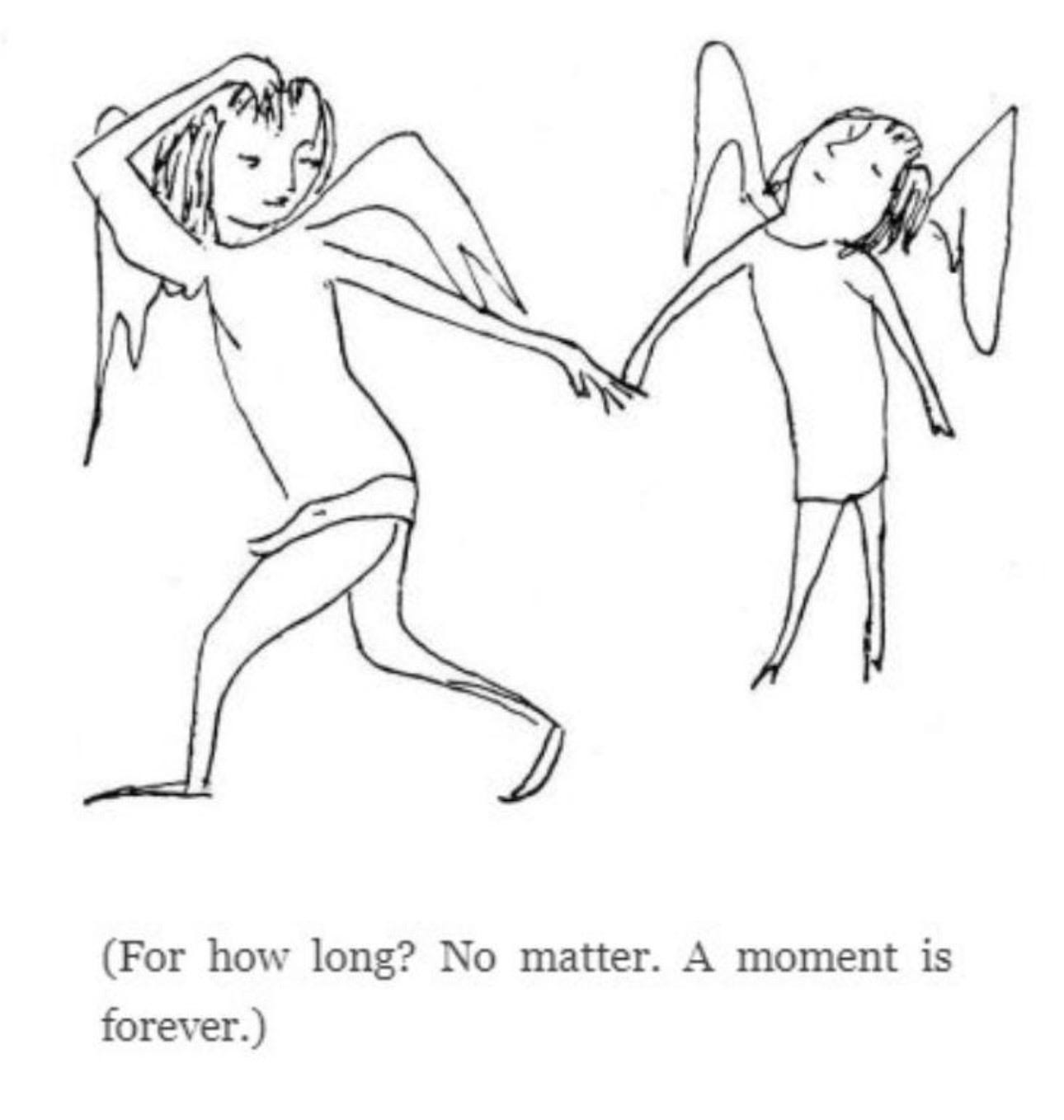
These days, I’m browsing white dresses and having dreams of giving birth to a wasian baby. These days, I’m hit with tsunami waves of realization that I’m going to be doing a lot of things for the very last time as a legally single woman.

A bachelorette lives on an island in her head: she holds onto her “last time” experiences—she counts down the number of times she’ll have breakfast alone, in her own apartment with Fitzgerald and no roommates; she counts down the number of times she’ll still sign her father’s last name. This February 14 will be the last Valentine’s Day she’ll spend with someone who isn’t a husband. Last November 27 marked the oldest age she will ever be as a single woman before God and the law—her next birthday will mark the youngest she’ll ever be as a wife. On this island, she is Penelope with apodictic certainty, counting down to the end of waiting, to Odysseus’s first and final landing.
Falling in love in a single-player game
In Room 11 of The Kunsthistorisches Museum in Vienna, you’ll find this diptych of Adam and Eve by Cranach:
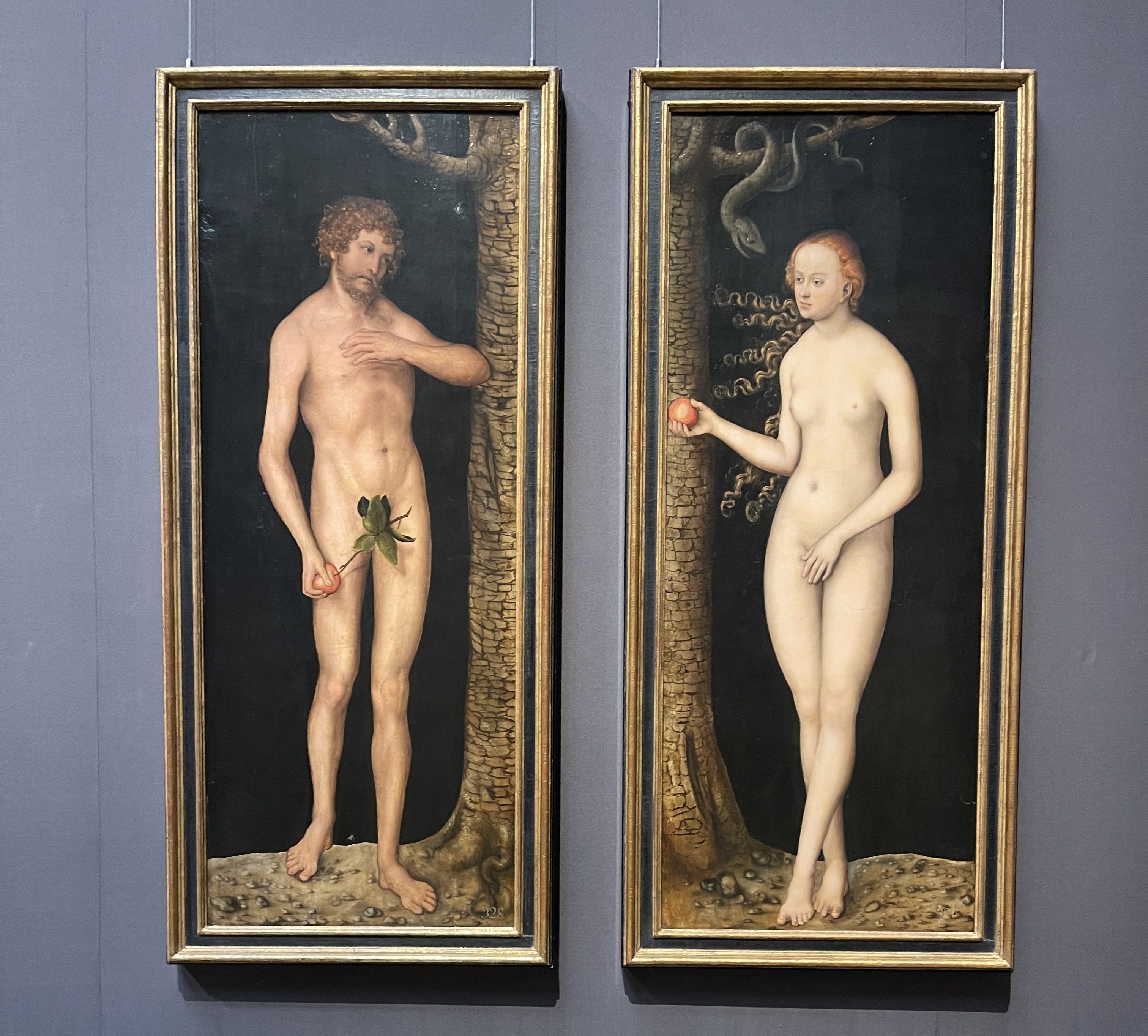
Painting them separately symbolizes the importance of their difference before union: man and woman as parallel creations, equal but distinct, mirroring each other across the hinge. I always feel like they’re more idyllic when painted like this instead of being on a single fresco, together in the Garden. Compared to Michelangelo’s, done around the same year,
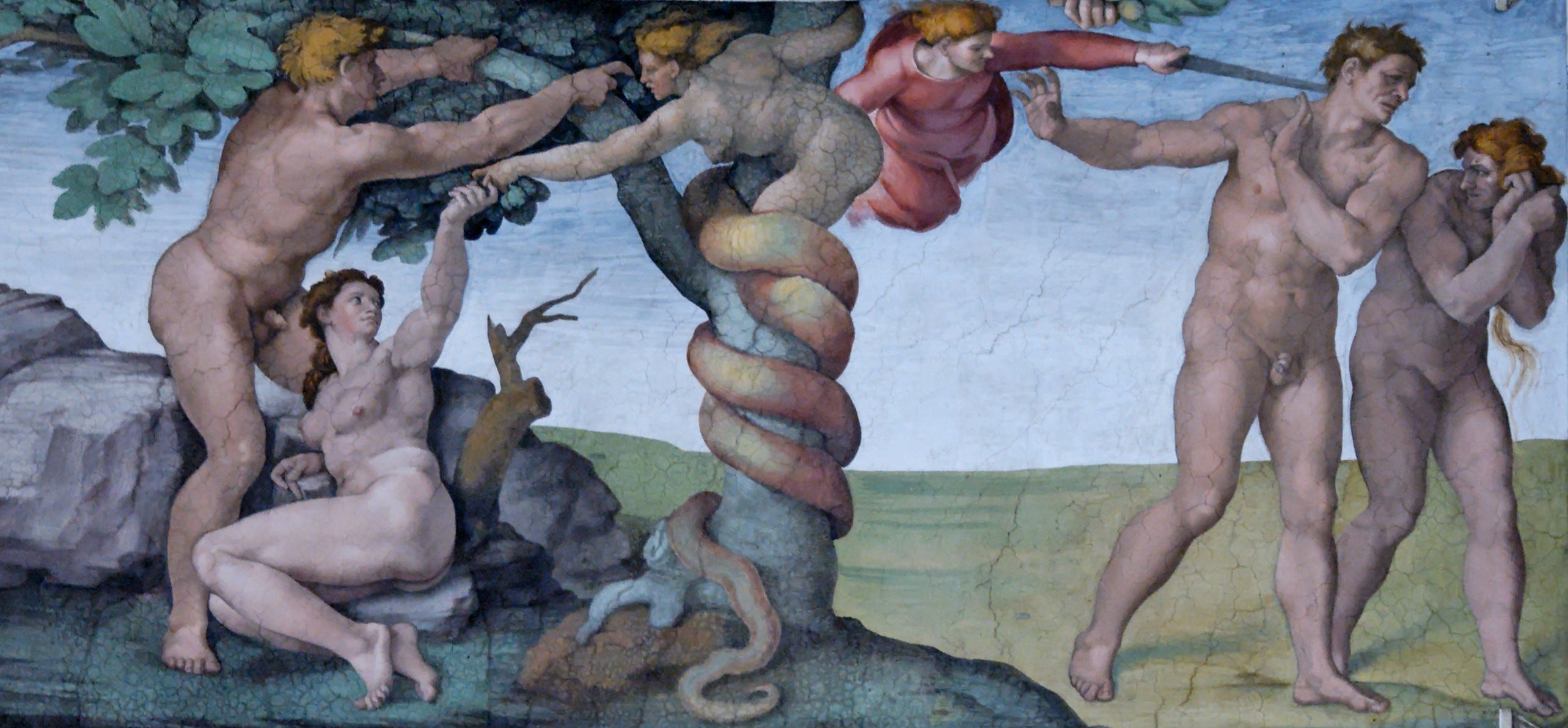
the separated Adam and Eve are frozen in their perfection. They lack story, they stand posed like asexual specimens in a textbook, free from trauma and desire, pain and passion.
The creation story in Genesis has always been my favorite because it’s about how people fall. We say “falling” in love or that people “fall” for one another because the feeling of love is exactly that: it’s a straying away from what’s planned, it’s something unexpected, it’s something that opens our eyes to see a person in a new light (and we become conscious of how they make us feel), it’s Emily Dickinson’s “The heart wants what it wants or else it does not care”—love makes us break rules, even when they’re our own. The story of Adam and Eve is the archetypal story of two people who fall together, who break the rules together and for each other.
It’s also the first horizontal fall. Religion is full of heirarchies: God is above all and everyone strives upwards, like Moses climbing Mount Sinai. With this height comes a lot of falling: Israel falls. The Tower of Babel falls. Adam and Eve fall. Everyone fails to live up to perfection. But, in breaking away from God together, Adam and Eve rediscover themselves as two people standing side by side, suddenly aware of one another in a new and unsettling way. They’re no longer only people beneath God; they’re companions facing the same world, sharing the same consequence.
They’re no longer a diptych. What matters now isn’t perfection, but the choice to stick together—after all, isn’t that what love is? An opportunity to keep meeting one another on the same side of reality—the imperfect side—to recreate heaven by sharing a private language of care and attention? By choosing presence over idealism and loyalty over escape? An opportunity to fall so deeply into each other that a glimmer of paradise lost can be found by looking to your side instead of above? (Heaven is a place on earth with you—Lana Del Rey)